
Author: Paige Colón
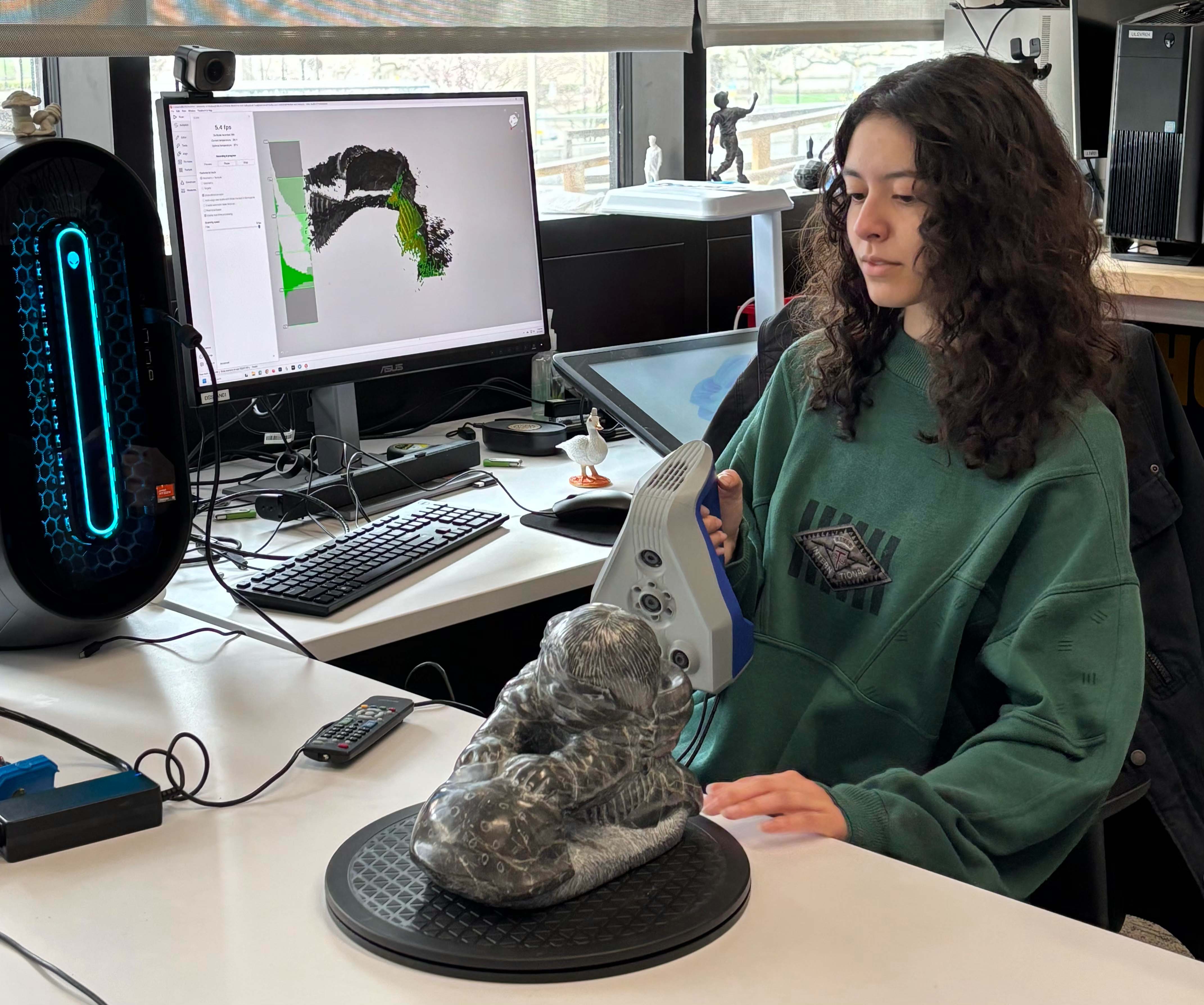
People experience art in different ways, and some may not get to experience art at all. With the goal of shaping more meaningful interactions between the University Art Gallery (UAG) visitors and art, I considered how to create experiences that incorporated more senses than just sight. Universal design (UD) principles inspired me to challenge typical museum practices to help develop engaging experiences that cater to people with a wide range of abilities and needs to the greatest extent possible.
Tactile art allows visitors to actually touch objects. Since every artwork in the UAG collection is too delicate to allow visitor handling, I made objects that could weather years of public use. I focused on a collection of Inuit art from the mid-20th century because its recurring display will allow many future visitors to interact with these objects. The collection features dozens of soapstone sculptures with intricately carved details. While soapstone is heavy and delicate, the 3D-printed filament and resin replicas I made are lighter and more durable for frequent handling.
With guidance from the University of Pittsburgh Open Lab (OL) staff, I physically scanned two soapstone sculptures using resources in their lab. The data I collected made a couple of things possible. First, the scans allowed for exact 3D-printed models to be created in OL with the intention of being held and examined by gallery visitors with varying degrees of sight, grip strength, and other sensory needs. Second, the scans display 360° digital models, opening up the potential virtual exhibition for visitors unable to make it to the physical gallery space.
To further this project, I also wrote visual descriptions of the two soapstone sculptures. This grants individuals who cannot fully see the sculptures the chance to imagine them or notice smaller details. These visual descriptions begin the process of creating an audio tour option that can be developed in the future. Visual descriptions provide visitors with a new connection to art through narration.
Paired with my written visual object descriptions and a block of real soapstone, the 3D-printed replicas from OL meet several different access needs. I plan to present my work by leading an object lesson, setting an example for how to include a broader audience and break sensory barriers in art history. My preliminary work opens up all kinds of possibilities, including data that could help apply for an accessibility grant in the future. By sparking the conversation of accessibility and taking these initial steps inspired by UD principles, I have helped develop new ways to make the UAG a more inclusive space overall and a comfortable place for more visitors to engage with art, regardless of sensory needs.