
Author: Holly Murphy
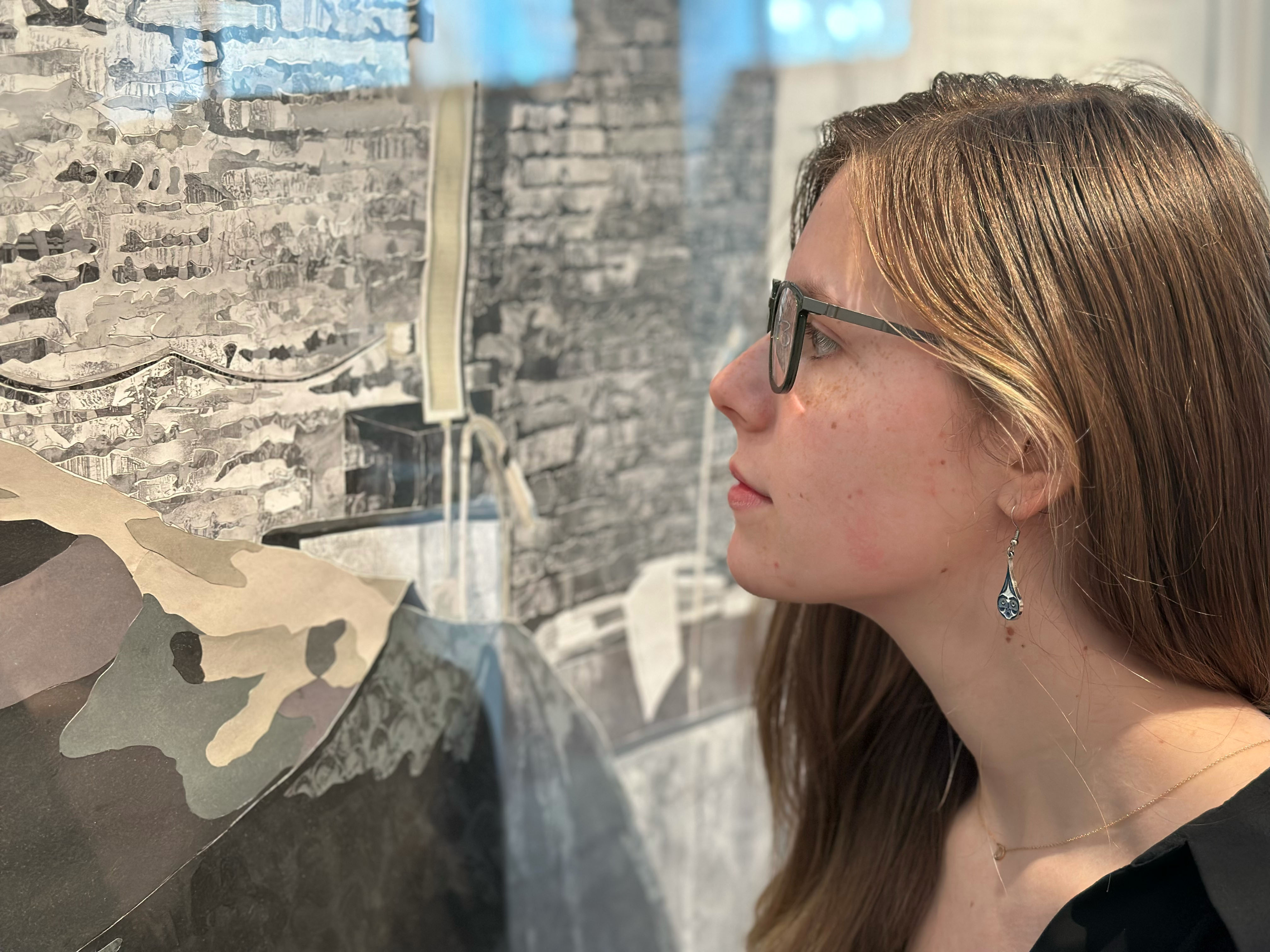
The internet has made it easier than ever to identify unknown works of art without knowing the artist or title. During my internship with the Malta Foundation, a private collection of mainly contemporary art held by Woody and Nancy Ostrow, I saw a lot of work created by artists I had never heard of. The contemporary art collection on the first floor is filled with large-scale works of art, including a collage by German artist Marcel Odenbach. When I chose this work to do a deeper analysis on, I had no idea how much complexity there was behind it.
We started by creating biographies of the known artists in the collection, which was my first introduction to Marcel Odenbach’s art. When I saw the collage in the Ostrow’s collection, I identified it right away as one of the German artists' works. My research was strongly guided by the use of internet tools such as Google’s Reverse Image Search. A preliminary search led me to the title of the work “Der Ort Ist uns nähergerückt“ but it wasn’t until a different search using the English translation of “this place is brought close to us” that I started to get deeper into the past reception of the work. Some authors would only reference one of the two titles, which made research more difficult.
Looking closely at the work with Alex Taylor, we theorized that the collage was an image of a courtroom, and that the image on the wall was a map seemed to represent a concentration camp. Reverse image searches on the map revealed that it was a drawing of a 1944 surveillance photo of the Auschwitz-Birkenau camp. I continued down that path until I found a photo of the map in a room with a brick background, similar to the collage subject.
From there, I was able to search the name of the trials before finding a Getty Images page that included the photo I had been searching for all semester: the almost identical match to the collage I had studied. This discovery opened up new paths of research that ultimately led to my final analysis of the work. The collage was based off a photo of the courtroom used in the 1964 trials of Auschwitz guards in Frankfurt, Germany. Besides the map, the rest of the room is made up of a collage of historical photos to show the historical memory of the German identity. Odenbach uses his art to contemplate how past events have affected identities and understandings of Germany today.
Tools like Google Reverse Image Search are incredibly important for a new generation of art historical research. As more contemporary works get added online through collection databases or galleries, so does the ease of understanding the path a work took to be made, and its collection history. These tools are a way of expanding my research avenues and ultimately led to me being able to provide a more meaningful analysis and tour script for the Malta Foundation.