
Author: Kaiya Kubasik
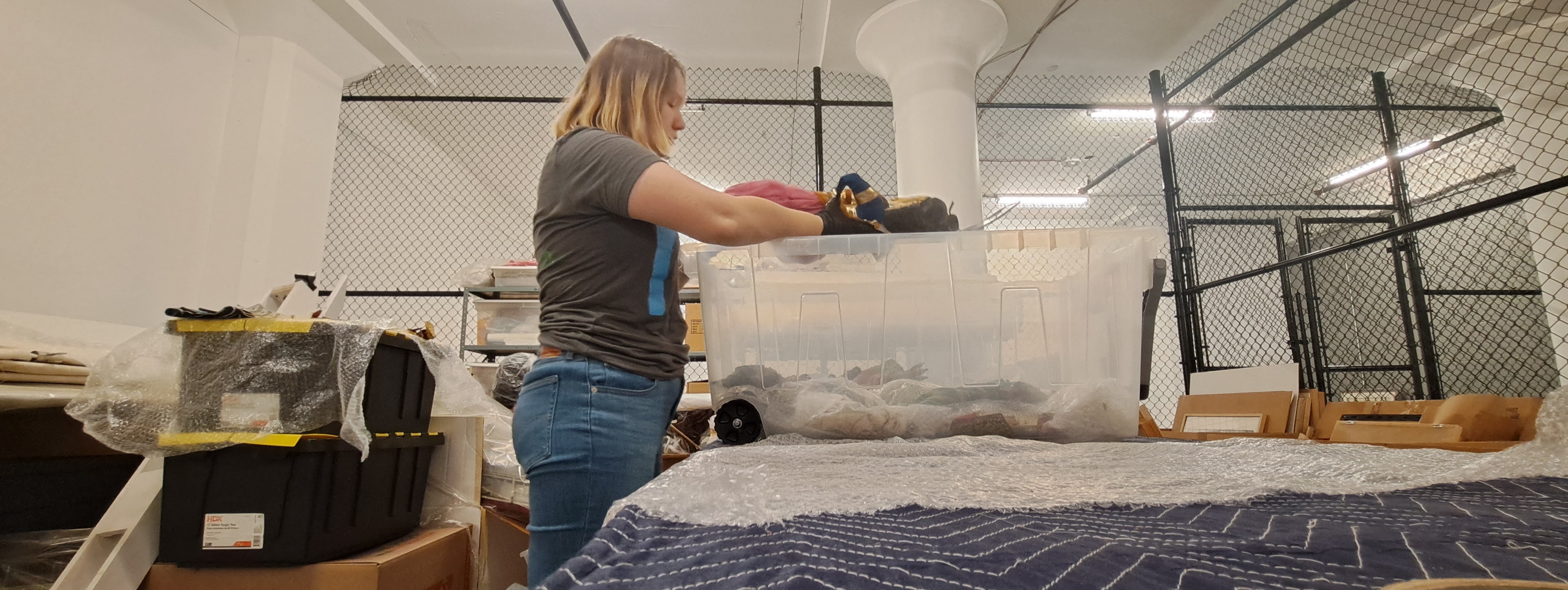
Goblins, two-foot-tall marionettes, and dozens of hand puppets are in the Children’s Museum of Pittsburgh’s storage, just waiting to be seen by audiences. But what happens behind the scenes to preserve and prepare the items for display or keep them maintained when not on view? The answer is a lot of careful organizing and cataloging, usually in conjunction with resourcefulness in the face of a lack of space or maybe even ideal materials.
Many donations to the Children's Museums come from personal collections. This means they might arrive at the museum stuffed in plastic boxes without any label or recorded history beyond the donation. And because museums like the Children’s Museum of Pittsburgh need to look ahead at building exhibits and experiences for children today, these boxes of donations can pile up, making it difficult to identify objects that could be used in upcoming exhibits and becoming overwhelming for employees to manage
In the spring of 2025, I was given the opportunity to brave the Children’s Museum of Pittsburgh’s storage unit and attempt to make a dent in cataloging the specimens the museum has collected going all the way back to the 1980s. This involved rearranging the many boxes and creating a more open pathway to allow employees to reach every shelf or crate. But it also meant photographing and labeling each of these boxes and their contents in order to identify what is currently in the collection. A pressing issue that many museums face is that they have artifacts lacking documentation or interpretation. So, in my experience of wading through the backlog of work, it felt as if I was unearthing a history of childhood that is not present in our current society or understanding of children and play. This is because many of the items in storage were not meant to last very long or were too fragile for the public to handle them.
An ingenious interactive exhibit such as Animateering, the animated puppet collection by Carnegie Mellon University’s Entertainment Technology Center, is one solution for such objects. This exhibit encases the delicate puppets behind glass but allows children to interact with them using imaginative play via a virtual puppet that tracks the child’s movements, keeping the artifacts safe but still involving them in the mission of the museum.
Throughout my internship, I was exposed to innovative choices like this for the benefit of children and adult visitors alike, and being a part of the effort to not only preserve historical objects but also look ahead to how to engage the young generation was thrilling. As was, of course, getting to see three life size goblin puppets in storage that hopefully get put on display someday.