
Author: Cora Branch
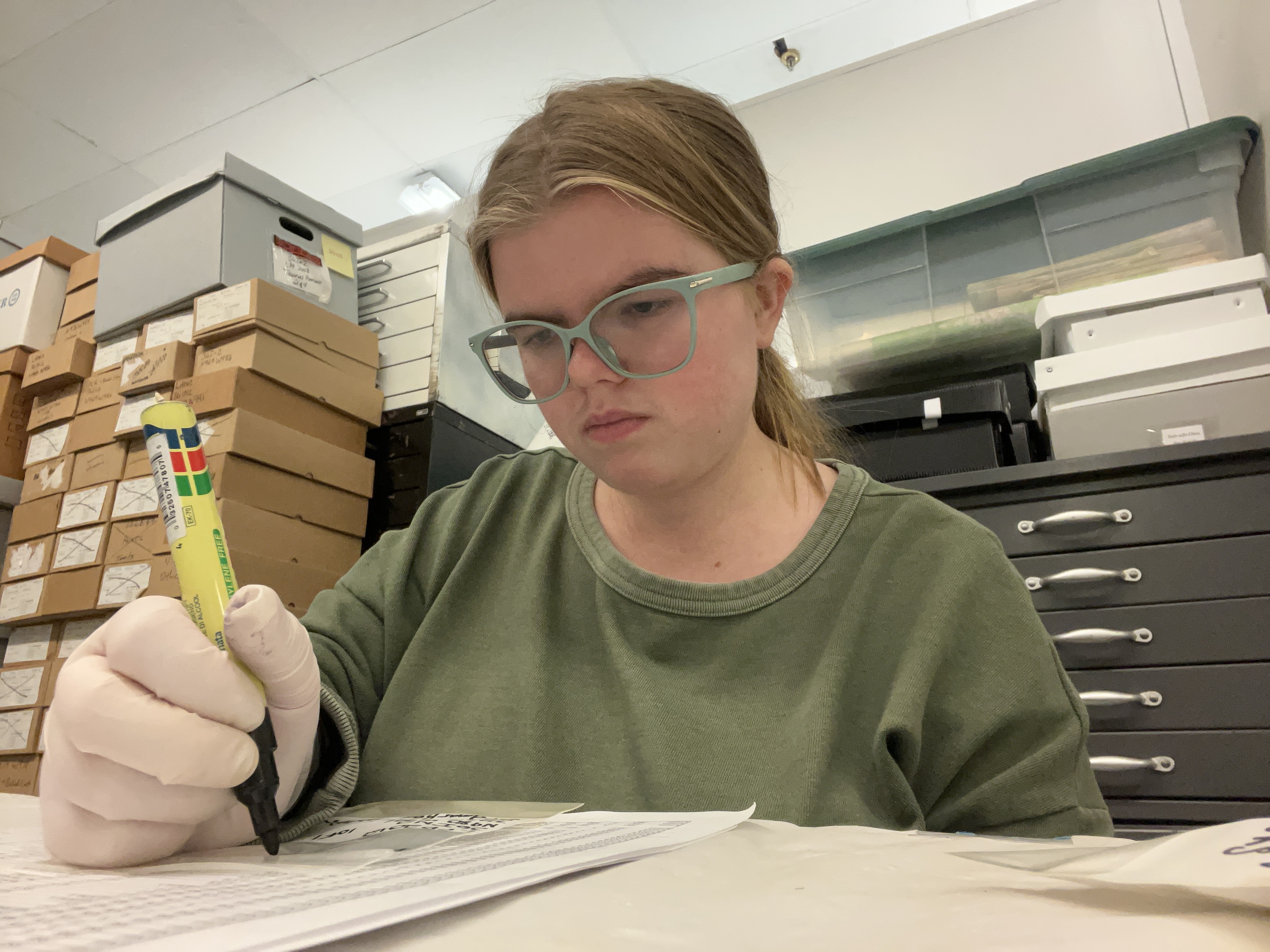
Did you know that the Carnegie Museum of Natural History has over three thousand dolls in its collection? I was certainly not aware of this unexpected collection before my supervisor asked me if I wanted to write a blog post on one of these objects. It was a difficult choice. There were so many different dolls from around the world and across time. I had never done this type of archival research before, and this was an opportunity to get my feet wet. I wanted to make it count. In the end, I could not pass up the opportunity to learn more about a place I had a previous connection to.
This past summer, I participated in the Lechaion Harbor and Land Settlement Project in Greece. Looking to learn more about the country I had lived in for a month, I looked at the dolls from that country. One of the boxes I looked at contained three twentieth-century dolls from Greece. They were all beautiful, but one caught my attention. It was a cotton and wool doll with a painted face and twin braids. It wore a bright blue dress, pink apron, and headscarf. There was some embroidery and objects for spinning thread in its hands, but it was not as decorated as the other two dolls. The doll’s simplicity and brightness appealed to me, so it became my choice.
Researching the doll was quite thrilling and a challenge. I could not find any manufacturing names or locations and looking up similar dolls lead to a lot of Etsy shops with irrelevant and unreliable information. As there was not a lot of information to be found on the surface, I had to dig deeper into Greece’s history and culture. It was an exciting prospect.
First, I started looking into Greek folk costume and weaving practices. I found a blog post online discussing similar dolls that credited a book by Angeliki Hatzimichali and published by the Benkai Museum called Greek Folk Costume. Looking through the two-volume set, as well as some other resources I found online, I decided that the doll’s costume was probably not based on a traditional costume.
With that rabbit hole coming to a dead end, I decided to focus on what the doll was holding: a distaff and drop spindle. Before this project, I had no idea what either of those objects were, but I could tell they had something to do with textiles and spinning thread. I learned a lot about the different materials and processes used for making textiles in Greece and the parts the distaff and drop spindle play in those processes and Greek culture.
Overall, I fell down several rabbit holes while researching this simple-looking doll, and I enjoyed it thoroughly. I learned a lot about Greek culture and history relating to dolls and textiles, and I got some valuable experience doing archival research. The opportunity to do this research has brought me a lot of joy, and I look forward to similar opportunities to look closely at cultural objects in the future.