
Author: Liam Flynn
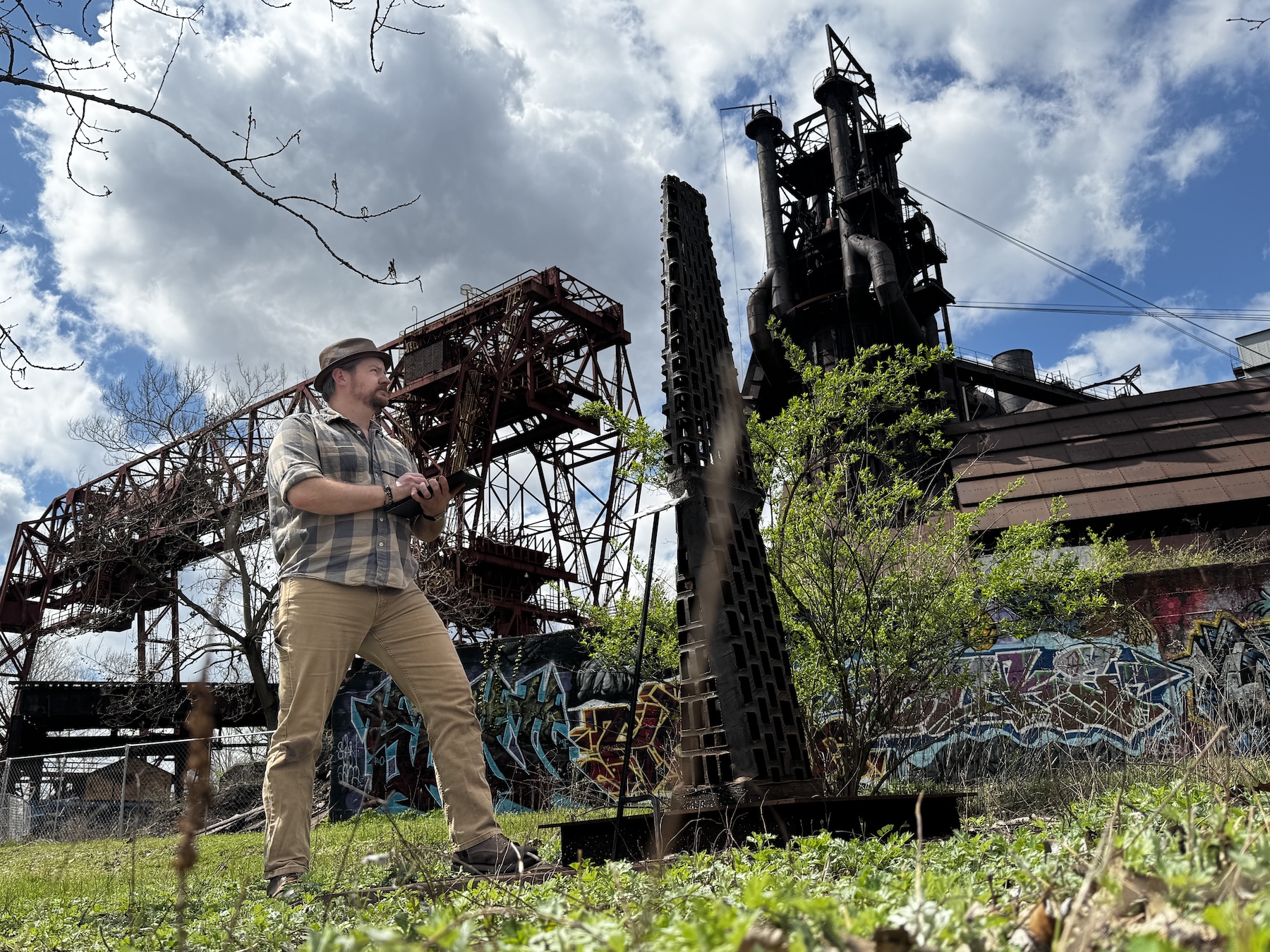
The Carrie Blast Furnaces at Rivers of Steel in Homestead are a dynamic historical site. They are remnants from the steel mills that lined the Monongahela River for 100 years. There are just two furnaces remaining, plus some of the larger buildings that were left in place after operations ended in the 1980s. At first, I understood the site to be like the Fort Pitt Museum: a place for information on the site where “history” happened, a reference for understanding the past. I was wrong. This is not just a place where things once happened; it is a place that is also very much alive in the present.
The Carrie Deer was one of the first artworks to be erected on the site. Made from scrap found around the rusting industrial pipes and catwalks, it rose through the effort of vigilante artists. No one asked for it, no one expected it, and it was largely unseen, unless you also trespassed. In talking with people who have worked the site, who made it into a National Heritage Site and saved it from the wrecking balls, Carrie Furnace exists as it is today because of the Carrie Deer.
Art has continued to be made at and brought to the site since 2000. So much that the Carrie Blast Furnaces and art have become synonymous with each other. My project was to research the artists and the artworks that are spread around the site, generate new labels, and develop digital resources from the information I gathered. What I learned was that the art at Carrie was more than a nod to the industrial output of Homestead. These were objects that represented gestures of reclamation.
My biggest challenge was connecting the artworks with the industrial site. Barney Terrell, the curator and head archivist for Rivers of Steel, works not just to capture the stories of past people who sweated in those jungles of ironworks, but also tell the stories of people still living. As I learned how metal from the site was used in creating the artworks, the processes and techniques used being the same as the generations of steel workers, I saw the connection. Homestead and its people still carry scars from that time. The artwork is a balm to help that healing. As the community works to reclaim the site, they are also reclaiming their spirit.