
Author: Kelsey Shuck
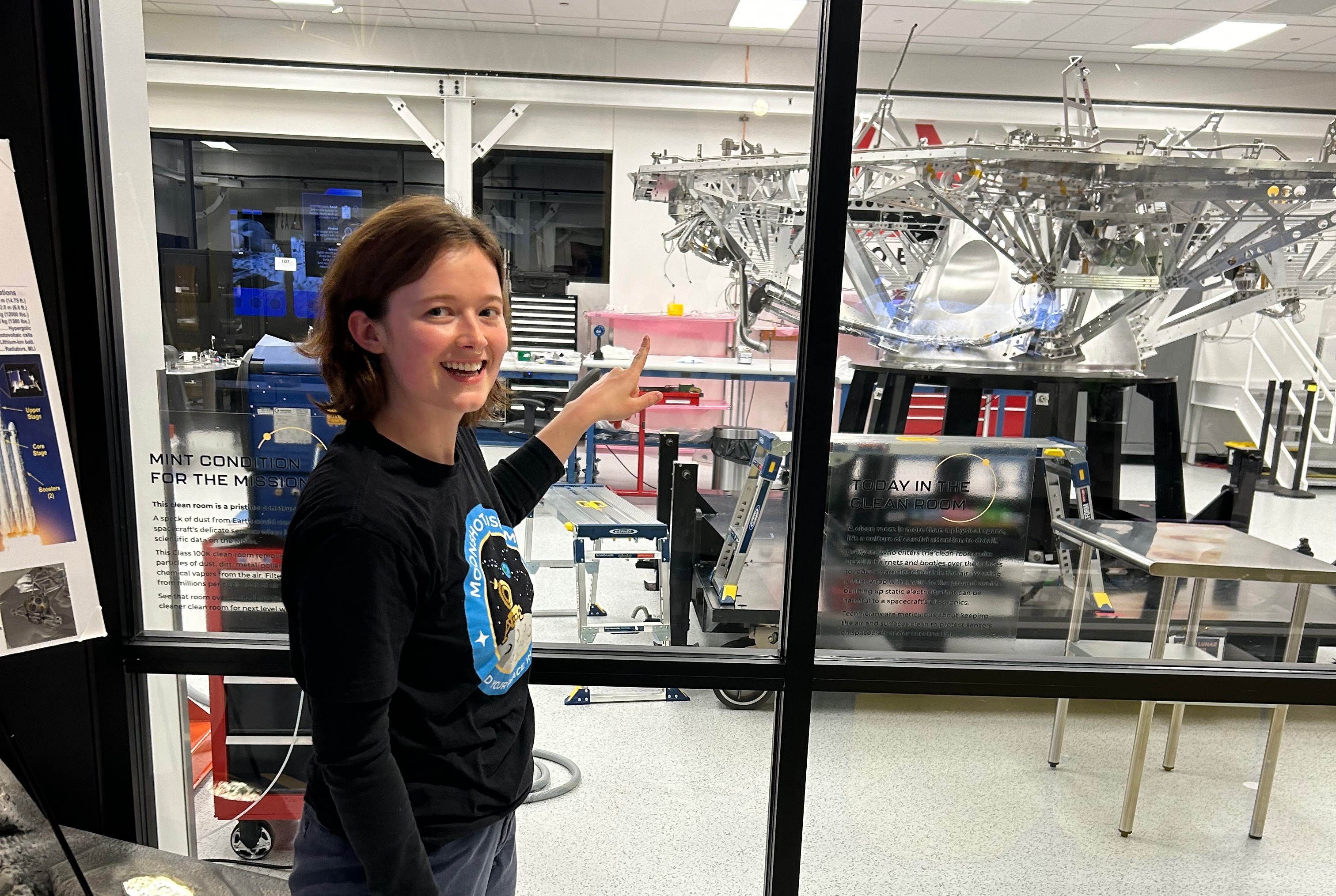
One of the most memorable moments I had during my internship at the Moonshot Museum was trying to explain how one of the Astrobotic prototypes of a solar array panel worked to a group of kids. They were full of seemingly unrelated questions, such as, “Are earthquakes real?” and “Would you ever live on the moon?” It occurred to me that space exploration was not just about technology. It was also about imagination. As I explained the same solar panel to a former NASA engineer just hours later. This time, the challenge was different: how do I make something they already know feel fresh and engaging?
These moments were a regular part of my internship at the Moonshot Museum, a nonprofit space museum that lets visitors see real spacecraft and rovers being built. Working alongside the manager of programs and learning, Mike Hennessy, I got to experience firsthand how the educational side of a museum functions. The goal of the museum is to educate people on the different career pathways in space. It is not only astronauts and engineers but also accountants, artists, lawyers, and even museum interns like myself.
Outside the museum, I spent a lot of time creating pre- and post-lesson plans for visiting school groups. One of my favorite lessons explored the connection between mythology and science. Students learned about the moon's formation and Artemis, the moon goddess, then created their own planets and moons from clay or foil, crafting myths as if they were the first inhabitants. The central idea of the lesson is how art and science are interconnected and have been since the beginning of civilization. Another lesson I developed focused on Afrofuturism, where students envisioned a museum honoring Black pioneers in space and technology. They researched a historical figure, created or selected artifacts related to them, and wrote their own museum wall text to tell their story. This lesson emphasized the importance of diversity in every field, highlighting how every voice matters in shaping the future and inspiring the next generation.
The biggest lesson I took away from my time at the Moonshot Museum had nothing to do with lesson plans or space science. It was about the importance of community and collaboration. One day, I was showing around a graduate student in engineering, and he asked me questions about spacecraft metals and fuel types that went way over my head. But Eric, a retired technical writer who volunteers at the museum, was able to answer every question with ease. I was ridiculously impressed, just as Eric had been with me the week before when I was able to keep up with a group of 10 kids with endless questions and energy. Just like in space exploration, the work in a museum requires many different skills and knowledge. It wasn't about always having the right answers; it was about working together and respecting each other’s different skill sets.
I'm grateful for the opportunity to have been part of such a unique experience. I came into the internship with a lot to learn and left with a deeper understanding of how museums, space exploration, and communities work. The Moonshot Museum taught me that in both space and life, there's no one path to success. And just like the moonshot missions that inspire it, the Moonshot Museum reminds us that the sky is not the limit; it is just the beginning.