
Author: Monica Daniels
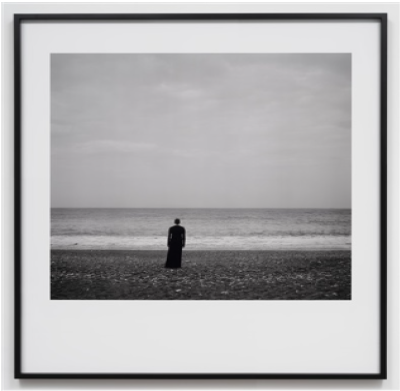
Carrie Mae Weems, “A Broad and Expansive Sky-Ancient Rome, 2006.”
As the spring semester of 2024 approaches completion, I reflect on my year as a Hot Metal Bridge Bridge Fellow and the literary journey during the Space and Place Constellation seminar titled, Topographies of Power and Resistance. We began at the shores of Rome, traveled to the harbors of Carthage, moved through the infrastructure of Venice, explored symbolic imagery in maps of Tenochtitlan (Mexico City), envisioned mechanisms of the Middle Passage, and lastly, excavated the hidden liberation found in the place of marronage within swamps of the American south.
The class modules were divided and led by three professors and they provided a broad range of reading assignments. We were tasked with a challenge to discover similarities that would link our research subcategories with the seminar topic. From my previous career as a classroom art teacher, I understand the importance of cultivating a safe-space classroom experience. We engaged in weekly dialog involving close examination of architectural features, maps of city plans, and cultural entanglements; which at times, was hard to discuss openly in class.
One essay left a major impact on me. In an essay titled, Spaces In The Shadows: Archives and Architectures In The Work of Carrie Mae Weems, by Mabel O Wilson, published in the book, Black Modernism, Wilson examines the “Biomythography and storytelling” practiced within the photography collection by artist Carrie Mae Weems. Wilson states: “but these institutions, along with cities and landscapes, are spaces from which Weems creates other possible narratives through her counter-histories” (Wilson, 226). I’m captivated by the concept of “counterhistories.” I plan to sit with this term when considering methodological approaches toward archival research practices.
Wilson describes the purpose of “counter-histories” as “to disrupt racialized visuality and images that cast Blackness in time” (Wilson, 226). Since my research as an incoming graduate student is centered around women’s art-making practices and material culture within the African diaspora, the term, “counter-histories” may provide a framework and entry point to examine existing archives and use the action of disrupting racialized imagery to develop “counter-histories” from my interpretation.
Weems’ art and Wilson's words were like an anchor as I considered my positionality within the class and the influences from the readings. I analyzed the image of Weems in the photograph titled, A Broad and Expansive Sky--Ancient Rome, from the series Roaming, 2006.
The title is captivating and creates a place in itself. According to the title, Carrie Mae Weems stands at the shore of the beach in “Ancient Rome.” She looks out into the open waters and sky with her back facing the camera lens. Her presence in the frame is commanding and sparks wonder. My interpretation of Weems' act of gazing out into the vast space, is an internal performance of creating a “counter-history.” The photo title situates the viewer in Rome--the source of Western identity and ideology. Positioning herself on the Roman shoreline is an act of space-making within modernity.
During this semester, I unpacked my understanding of what it means to establish and or project a facade of “empire” within self, space, and place. Defining the meaning of place and space on the subject matters of the Middle Passage and liberation through marronage was a process. The texts and discussions in the seminar covered multi-geographic locations, events, and new ways to present research through podcasting. We mentally traveled through space and time to examine readings that challenged our perspectives about encountering places.
The learning experience during this seminar was full of curves and twists. As an educator, I am cognisant that spaces and places we call classrooms, play a crucial role in the emotional transaction of receiving and sharing knowledge. Through this literary journey, we cultivated a safe-space classroom community to raise questions, explain understandings, laugh together, encourage each other, and at times express sorrows. I’m happy to have been a part of this Space and Place Constellation seminar cohort. I learned not only from the professors but also from my peers. I gained research strategies and exercised many pathways to explore space and place within the built environment.