
Author: Museum Studies Interns
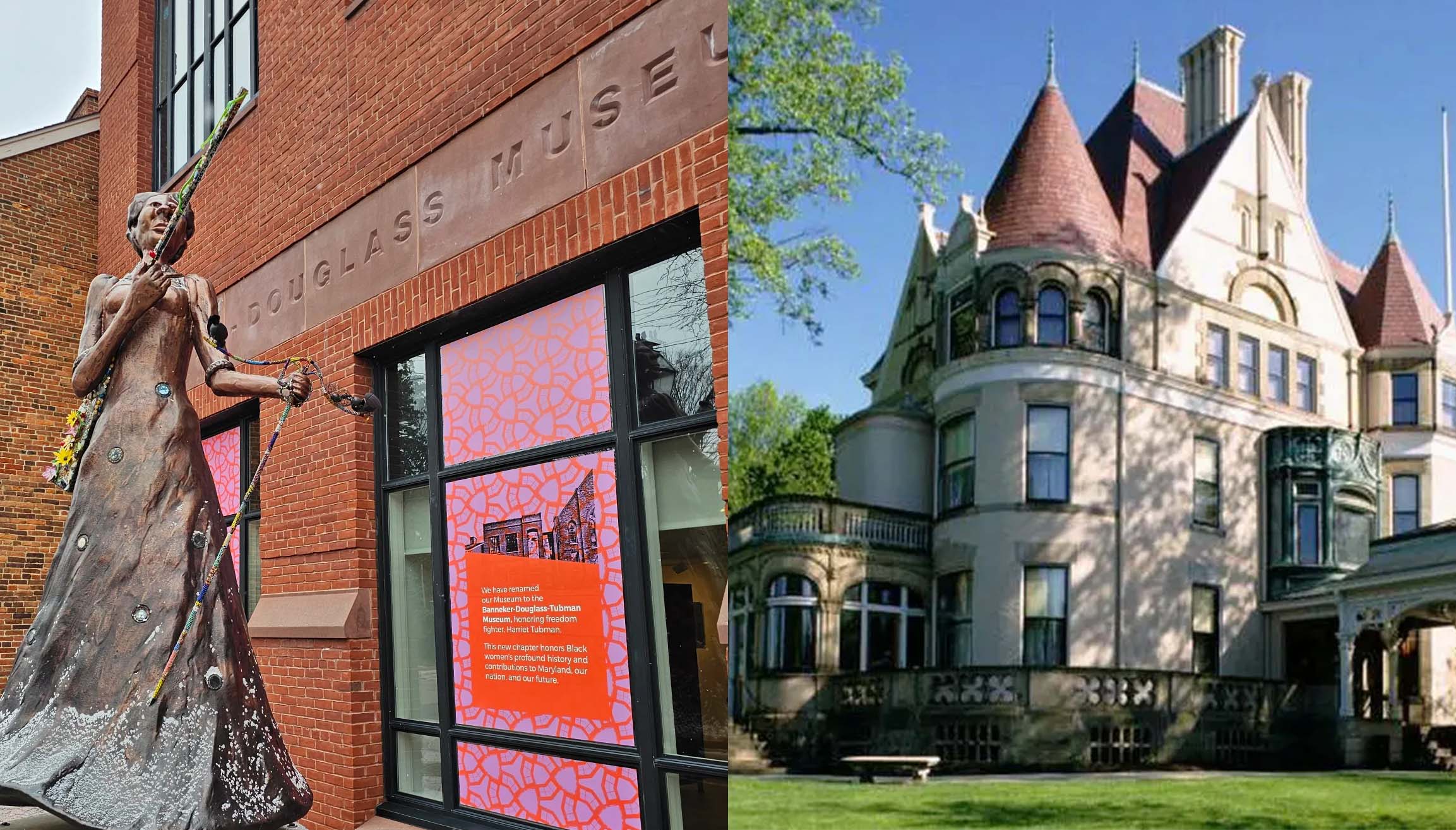
For this interview, current Pitt students interviewed two alumni from the Department of History of Art and Architecture and the Museum Studies program to learn more about their careers working in curatorial and exhibitions roles. Leslie Rose (Graduated in 2017) is Exhibit Manager at the Banneker-Douglass-Tubman Museum. Bella Hanley (Graduated in 2022) is Collections and Exhibitions Assistant at Frick Pittsburgh. The student group responsible for selecting these past students to interview and developing their questions was Holly Murphy, Louise Matthews, Matthew McCullough, Jonathan Casper, Paige Colon, and Mikayla Krisanda.
What made you interested in working in your current field?
Bella Hanley (Frick Pittsburgh): I am lucky to have found an interest in museums pretty early on, thanks to my mom, who also works in museums. Throughout my time in high school and college, she went from tour guide at a local history museum to director of our local township museum, which was a two-person operation, so naturally I got pulled into all kinds of volunteer work organizing, cataloging, rearranging, you name it! Those experiences helped me realize how fulfilling it is to look at the material record left by your own neighbors separated by time and piece together how their lives looked and shaped our own. (My mom is now the director of the museum she got started at, and continues to inspire me!) I have always been a maker of art and a lover of history, and getting a history degree while also studying museum studies/art history drew me to the overlap between the two—artworks as historical record. I also was definitely impacted by studying here in Pittsburgh, which led me to a particular interest in labor history and the many hands and stories building any one historical moment.
Leslie Rose (Banneker-Douglass-Tubman Museum): I’ve had a long-time interest in art, more so from a maker perspective, and I really enjoyed visiting museums as a kid. During my time as an undergraduate, I learned more about the various opportunities and /career paths within museums. I was drawn to the mission-driven, often community-centered approach to museum work, compared to an academic path or commercial art galleries. I chose to work and explore several museum departments before deciding to follow the curatorial path, including Education, Programs, Registration, and Marketing. I became interested in curatorial work specifically because I really enjoy the combination of research, writing, and working with artists.
What was your trajectory from Pitt to your current position?
Bella Hanley (Frick Pittsburgh): While I was studying in the Museum Studies program at Pitt, I was matched with the curatorial team of the 58th Carnegie International for an internship, which was a great introduction to working in both a larger-scale museum and one focused exclusively on art. Immediately after my graduation, I applied to and received the Milton Fine Curatorial Fellowship at the Andy Warhol Museum and spent a summer assisting on an exhibit called Andy Warhol’s Social Network, which gave me a look at the later stages of putting a large exhibit together—drafting labels, finalizing layouts, etc. After that, I spent a while as a gallery attendant at the Carnegie Museum, then picked up a job as a tour facilitator of Clayton, the historic home of Henry Clay Frick on the museum campus. That came at an exciting time for that tour, which was in the final stages of a major revamp to focus less on the decorative arts and more on the social history of the space and time. I know “tour guide” doesn’t seem the most glamorous museum job out there, but it’s something I find super fulfilling and gives me a lot of experience with the public and their reactions to our objects. About a year and a half into that role, the Collections & Exhibitions Assistant role opened up and I was able to take that on as well, working with the curatorial team in the Frick Art Museum and Car & Carriage Museum as well as Clayton. Now, I do all kinds of things, from administrative work, to collections care, to curation and text writing, and still lead tours!
Leslie Rose (Banneker-Douglass-Tubman Museum): I received my bachelor’s degree in history of art and architecture, with a minor in Museum Studies at Pitt. After graduation, I worked at a Pittsburgh-based arts non-profit for 1 year. In 2018, I participated in the Hot Metal Bridge Program, a post-baccalaureate program that offers exposure to graduate courses and graduate application assistance. Through the program, I applied and was accepted to the African Studies Master’s program at Yale University (2019-21). At Yale, I worked at the Yale University Art Gallery as a graduate research assistant and at the Yale Center for British as a research fellow. Afterward, I worked as the Community Programs Coordinator at Sandy Spring Museum, a Maryland-based museum. From 2022-2024, I was the Curatorial Research Assistant for Joyce J. Scott: Walk a Mile in My Dreams (2024) at the Baltimore Museum of Art. Currently, I’m the Exhibit Manager at the Banneker-Douglass-Tubman Museum, Maryland’s official museum for African American History and Culture.
What is the hardest aspect of working in the curatorial or exhibition planning field?
Bella Hanley (Frick Pittsburgh): There is a fine line to walk when curating exhibits between objects and information that are really interesting to art and history nerds (a loving term for my fellow museum workers!) but not necessarily to the general public. I know I have had to abandon some ideas that feel really powerful and interesting to me because they just don’t have the “it factor” to get people outside of the field excited and into the museum. In the same vein, it can be tricky to find ways to distill very big concepts into “bite-size” labels and keep things digestible for everyone, not just people coming in with a lot of background knowledge. There’s also a kind of trickiness that goes the opposite direction—pulling together a display working from a set collection of items, you start with everyday objects and small pieces of regular life and have to find ways to use them to illustrate those bigger historical concepts.
Leslie Rose (Banneker-Douglass-Tubman Museum): Many of the exhibitions I’ve had the opportunity to participate in require extensive logistical planning, project management, and communication between different departments. I’ve had to communicate an artist’s ideas to an installation team, a lighting designer, program managers, etc. It requires being detail-oriented and organized and being able to share the same idea with different audiences. The role has often presented challenges that were outside of my control (budget constraints, truncated timelines, low staffing, etc.). However, much of being a curator involves creative problem-solving and figuring out how to bring your and/or the artist’s vision to fruition despite the obstacles.
What skills are the most important for a successful career in curation and exhibition management?
Bella Hanley (Frick Pittsburgh): Like in many other jobs, an ability to rethink and adjust your plans on the go is pretty crucial. Many museums have had decades of various cataloging and storage strategies that mean that objects you expect to be in one place may not be, or other objects you didn’t expect might pop up instead. Seeing things in real life after working from thumbnail images might throw off your layout plans, lighting or climate concerns might force you to move sensitive items, and remaining flexible in how your displays come together will save a lot of grief. Hand in hand with that is the patience to understand that you cannot put every idea and every item into every show—narrowing down your scope allows you to do more justice to the items that do make it in, and you can hold onto other ideas for future use.
Leslie Rose (Banneker-Douglass-Tubman Museum): As I noted in my previous answer, a successful curator would need to be detail-oriented, skilled at project and time management, highly collaborative, and have excellent written and verbal communication skills. Additionally, being adaptable, open-minded, and empathetic goes a long way when working with others.
What is a favorite project of yours that you worked on?
Bella Hanley (Frick Pittsburgh): I recently got to take on my first self-led curatorial project to fill some display cases and vitrines in our galleries and visitors’ center with objects from our permanent collection relating to the current exhibit in the art museum. Since the show is a Kara Walker series connecting to the Civil War and the omission of Black Americans from the historical record, I pulled together a number of items for four displays. The two display cases in the Visitors’ Center focus on the way American kids from the Gilded Age through today learn about and play with the concept of wartime, using school supplies, books, toys, and weaponry belonging to the Frick children. The two vitrines in the art museum zoom in a little more on representation and misrepresentation in the historical record: one deals with the “Great Man” model of history, specifically focusing on the vast number of Lincoln-related books and objects in our collection, and the other uses an 1892 edition of Uncle Tom’s Cabin to talk about the power of images and illustrations in shaping a story and a history. I learned a lot over the course of putting these together on the full process of curating a display, from initial brainstorming through re-opening casework in order to fix book strapping that had come untaped.
Leslie Rose (Banneker-Douglass-Tubman Museum): My favorite project so far is Joyce J. Scott: Walk a Mile in My Dreams. I had the opportunity to work closely with the incredible artist, Joyce J. Scott. Working with living artists can be a very enriching, sometimes challenging, experience, but I’ve found I really enjoy it. As a 50-year retrospective, the exhibition involved a lot of different types of artwork (sculpture, clothing, beadwork, film, etc.) and therefore involved a lot of different approaches to display, installation, conservation, etc. Curating an exhibition of this size (140 works) took a lot of coordination between departments, which was difficult at first but became very fun for me, as I really enjoy working with others. The exhibition also addressed many historical and socio-political issues, so I found researching for the exhibition texts very fascinating.
Are there aspects of your work or career that you are looking to develop in the future?
Bella Hanley (Frick Pittsburgh): I would love to get more experience with collections care and art handling! I do a fair amount of this helping move our objects around our site, but I really enjoy those more physical and crafty elements of the job. Things like building boxes and mounts and assessing and caring for objects that need conservation work definitely appeal to me. Especially in a smaller museum where there aren’t necessarily specific conservators on staff and work like storing and transporting items is done by whoever’s on deck, I want to make sure my own abilities and experience are well-rounded!
Leslie Rose (Banneker-Douglass-Tubman Museum): As I continue my career (I still feel very new in the field!), I’m working to develop my networking skills and connect with other artists, curators, and scholars. Networking can seem intimidating, but you’re just connecting with like-minded people. It’s through my network that I learn about upcoming shows, new artists, or opportunities. Additionally, I plan to continue developing my writing. I greatly enjoy researching and writing exhibition labels for new exhibitions. However, much of my role involves more logistical communication than writing about art. I want to explore another way of being a part of my creative community through writing and publishing.